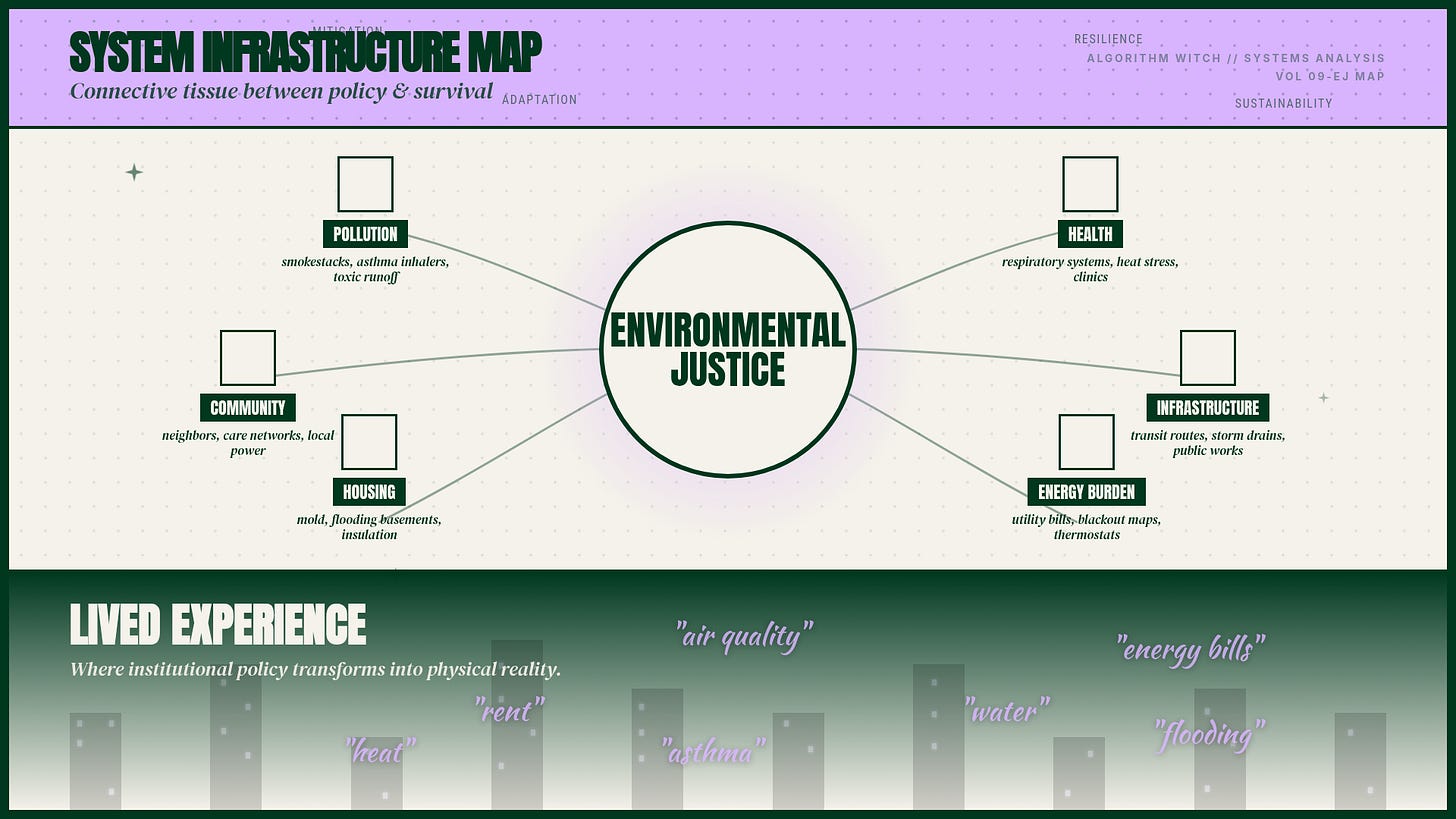
Climate communication spent years scaling through abstraction because large institutions needed language that could travel across policy, philanthropy, reporting, and national campaigns. Terms like climate change, sustainability, and decarbonization primarily organized the work internally, while environmental justice developed differently because it links pollution, health, housing, energy burden, and infrastructure into conditions people can physically recognize around them. Platforms increasingly distribute content through recognition systems tied to lived experience, geographic proximity, and conversational relevance, which means audiences now encounter climate through heat, flooding, asthma, utility bills, transit, and air quality long before they encounter institutional framing.
This is also how messaging becomes immune to co-option. The further climate language drifts from material outcomes, the easier it becomes for sustainability branding to function as aesthetics without redistribution, access, or accountability underneath it. I often think about the People’s Utility Justice playbook's warning of the opposition co-opting messaging and movements. That warning is especially salient at a time when platform systems reward semantic familiarity. "We need to prove that we have a more compelling, viable model for the public grounded in justice." Messaging immune to co-opting cannot be leveraged by the opposition to confuse our audiences. Once terms lose specificity, they become available for corporate abstraction, greenwashing, and symbolic alignment disconnected from participation itself.
01Platforms Are Prioritizing Proximity
Recommendation systems increasingly layer location and behavioral relevance together, causing creators, businesses, and events nearby to surface more often inside feeds. TikTok’s Local Feed rollout and Meta’s growing emphasis on personalized discovery reflect a larger shift where physical proximity becomes part of distribution infrastructure itself.
This changes how climate communication travels because local context now strengthens recognition. A post about flooding in Chicago, wildfire smoke in New York, or utility costs in Texas carries immediate social meaning for audiences already experiencing those conditions. Geographic relevance reduces the translation distance between issue and experience, allowing people to locate themselves inside the topic faster.
02Trust Is Consolidating Around Lived Expertise
As feeds become denser and AI-assisted publishing increases content volume, platforms rely more heavily on signals tied to retention, replies, saves, and semantic clarity. At the same time, audiences increasingly reward explanation over aspiration, pushing visibility toward scientists, organizers, educators, local advocates, and practitioners capable of connecting expertise directly to everyday conditions.
This shifts climate communication away from generalized institutional messaging and toward community-level fluency. People trust information that feels close enough to verify through experience, whether that means someone documenting transit failures in their neighborhood, explaining a local solar program, or showing how weather patterns are changing around them in real time.
03Participation Depends on Recognition
The largest barrier inside climate communication is increasingly structural rather than informational. Many organizations can clearly define the problem internally while still struggling to create visible pathways into participation externally.
Platforms intensify that gap because distribution systems reward language people immediately recognize as relevant to their own lives. Community-based framing performs differently because it gives audiences a clearer entry point into action, whether through local jobs, mutual aid, public transit, energy costs, neighborhood projects, or regional organizing. Recognition becomes infrastructure for participation because people engage more consistently when they can see where the issue touches their existing environment.
04Centering Around Community
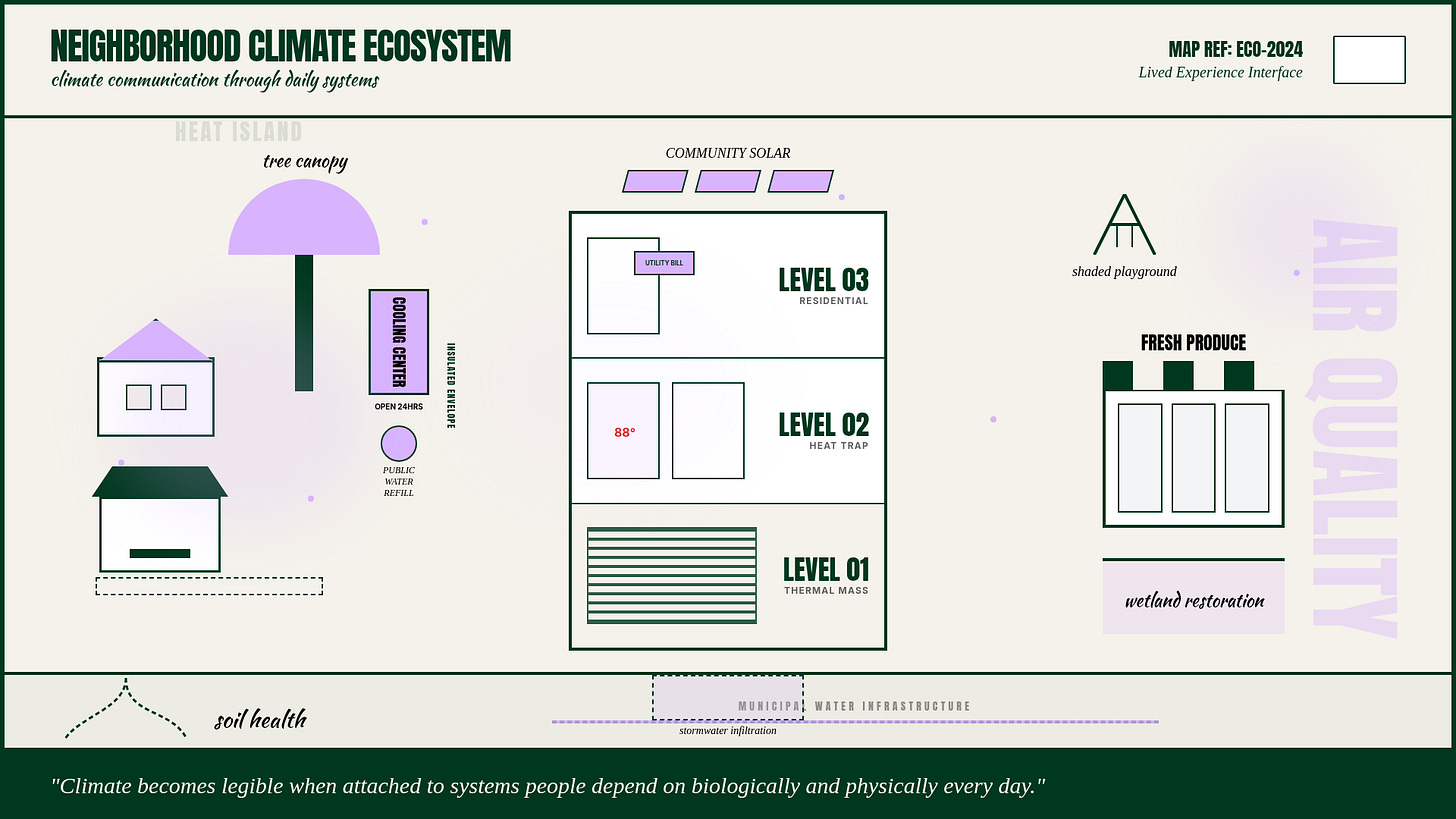
Climate communication is centering around community because feeds increasingly reward proximity, explanation, and recognizable lived context over abstract institutional framing alone. As recommendation systems learn where people live, how they behave, and what forms of expertise sustain attention, visibility starts clustering around communication that feels physically and socially grounded. The organizations adapting fastest are designing language, infrastructure, and participation together, allowing audiences to encounter climate through systems they already move through every day rather than through distant narratives separated from local experience.