The feed fills faster than attention can expand. As content multiplies across platforms, the meaning of performance drifts through channels that split and saturate beyond fixed points of measurement. Reach, engagement, and growth are central to metric dashboards. But distribution is increasingly shaped by systems that classify behavior, target proximity, and predict relevance to route content.
Success becomes harder to describe through followers, likes, impressions, and reach alone. Impressions and follower growth capture visibility. Retention, classification, and participation determine whether that visibility holds and extends.
In climate and clean energy work, meaningful metrics identify whether people can recognize where they fit and whether there is a path from attention into participation.
Vanity Metrics
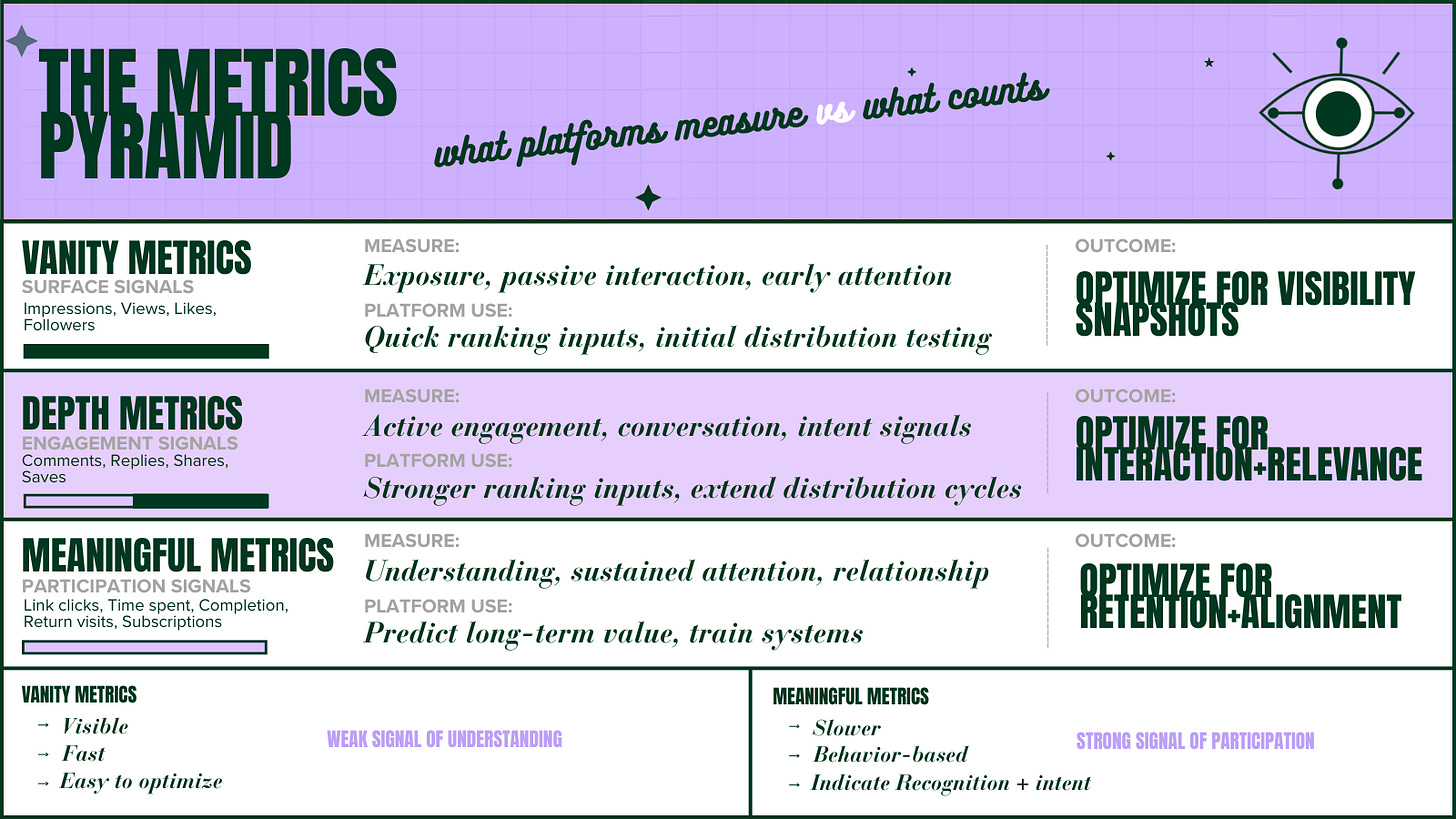
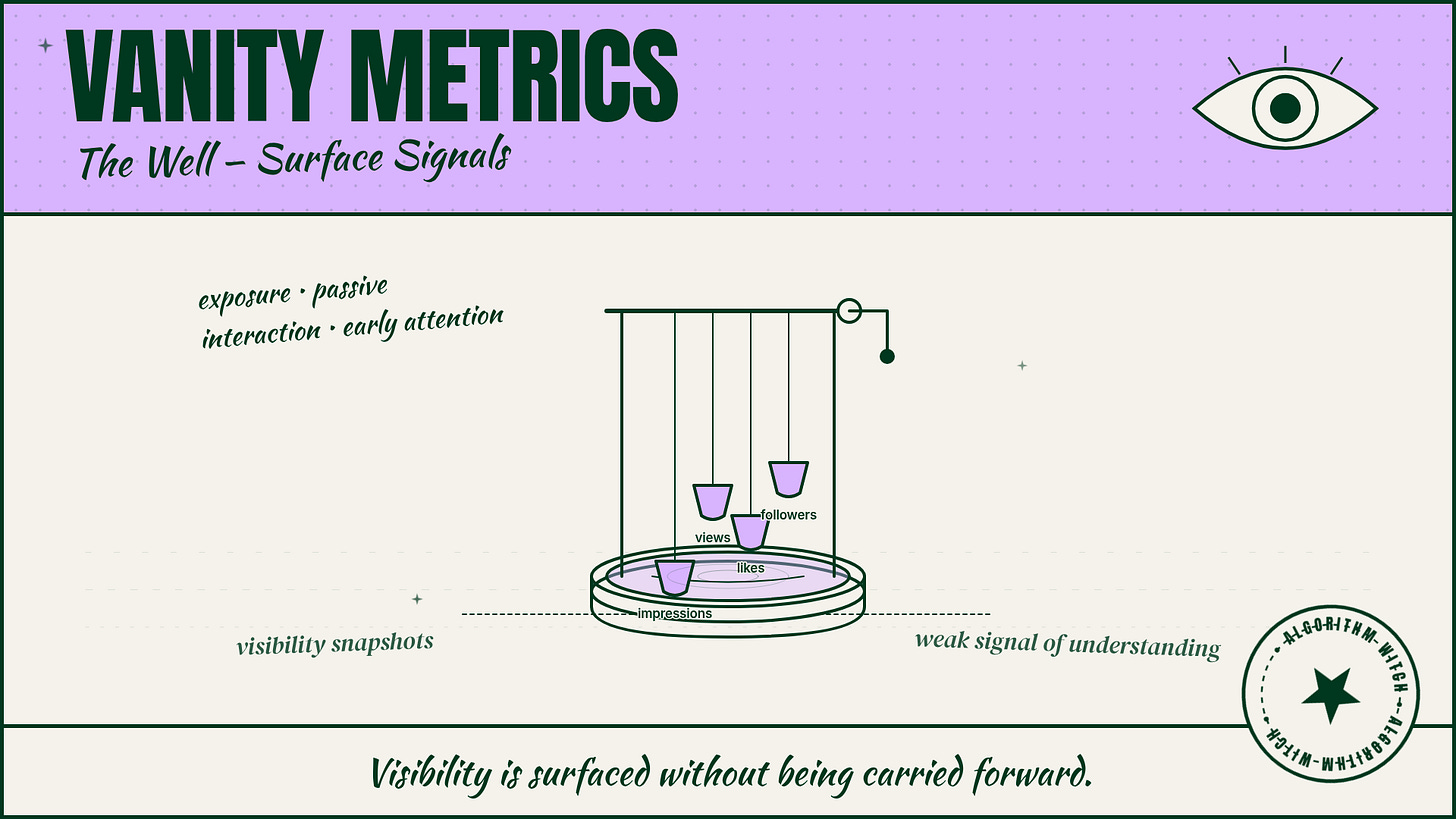
Vanity metrics are the surface level of distribution, where visibility is easiest to see and report. They capture how often content is shown, how many accounts are reached, and how quickly audiences grow. These signals describe exposure patterns across platforms. They do not explain why that exposure happens or whether it continues. As feeds become denser and content supply increases faster than attention, impressions expand through recommendation systems while interaction per post tightens. This creates the appearance of declining performance even as total visibility increases, reflecting how platforms distribute content rather than how audiences value it.
Likes
Impressions
Reach
Follower growth
Likes and reactions register quick feedback and signal that content was acknowledged. They require very little time or context from the audience. Platforms read these signals as lightweight indicators of interest, which means they can contribute to early testing phases but rarely determine sustained distribution on their own.
Impressions and reach operate inside platform testing cycles. Content is shown to progressively larger audiences based on early signals. As platforms test and refine distribution through recommendation systems, fluctuations in these metrics often reflect system behavior. Posts can receive wide distribution without establishing lasting connection. Posts can have narrow distribution and mobilize key actors who will reengage. Exposure is often more of a reflection platform design than a confirmation of audience relevance.
Follower growth reflects accumulated exposure over time. It signals that content has been seen often enough, but meaningful metrics look at the conversion of some portion of viewers into subscribers or participants. As Rachel Karten notes in her post on follower count as a misleading metric, audience size does not guarantee attention or alignment. Growth can reflect repeated exposure without confirming that an audience understands or engages with the work.
In climate and clean energy communication when accounts grow during moments of high visibility while ongoing participation remains uneven, follower growth marks entry into an audience but does not define whether that audience stays, learns, or acts. Likes cluster around familiar or emotionally resonant framing, such as extreme weather or headline policy moments, where recognition happens quickly without extending into deeper understanding or continued engagement. Large announcements or reports can generate spikes in visibility that introduce issues broadly without supporting sustained attention or action. These metrics indicate that content entered the system. They do not show whether it stayed long enough to build recognition and understanding.
01Depth Metrics
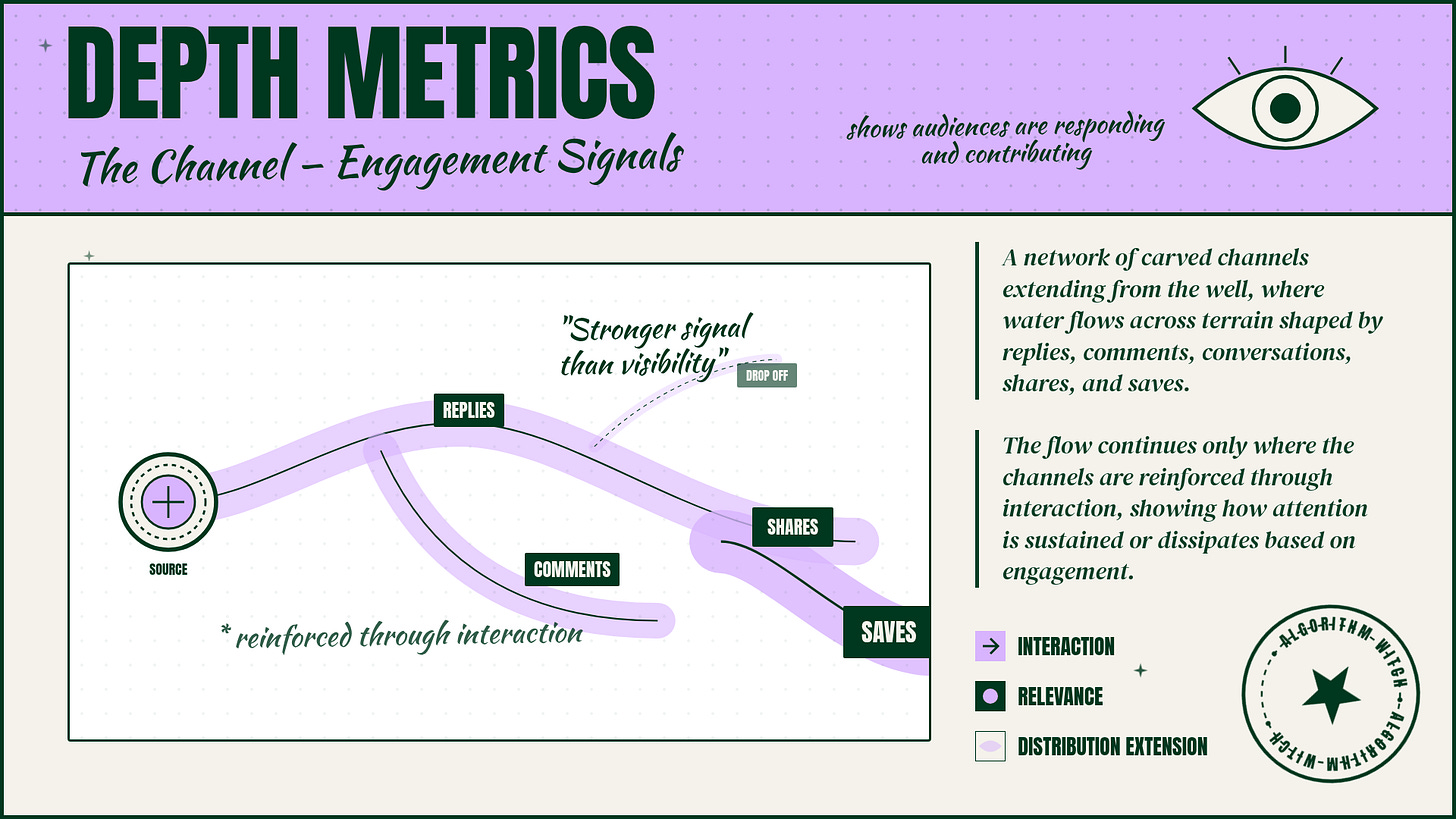
Depth metrics sit inside the layer where platforms evaluate whether content generates active engagement. They measure how people respond, interact, and contribute to a piece of content. These signals indicate that content is engaged with when it travels. Platforms prioritize engagement signals as content volume increases, making replies, comments, shares, and saves central to how distribution is extended.
Replies
Comments
Conversations
Shares
Saves
Replies and comments reflect active engagement with the content. They show that audiences are responding, asking questions, or adding context. Platforms interpret these behaviors as stronger indicators of relevance, increasing the likelihood of continued distribution because they signal that the content is prompting interaction rather than passive consumption.
Conversations extend this signal over time. Ongoing discussion shows that content continues generating engagement beyond the initial interaction. This strengthens ranking inputs and extends distribution cycles, as platforms prioritize content that sustains interaction across audiences.
Shares move content across networks. Public shares introduce content to new audiences. Private sends indicate that something felt relevant enough to pass along. These actions increase exposure and strengthen distribution when paired with engagement, because they show that content is being carried into new contexts where interaction can continue.
Saves indicate that content holds enough value to return to later. They signal future engagement rather than immediate interaction, reinforcing classification systems by showing that the content remains relevant beyond the first encounter.
On climate and clean energy social media accounts, audiences reply with questions about policy implications, comment with local context, share resources across networks, or save explainers for later reference. These behaviors indicate that content is generating engagement and extending distribution. They show that content is being interacted with and carried forward. Depth metrics indicate that content generated engagement and continued interaction. They do not show whether that engagement extends into participation or action.
02Meaningful Metrics
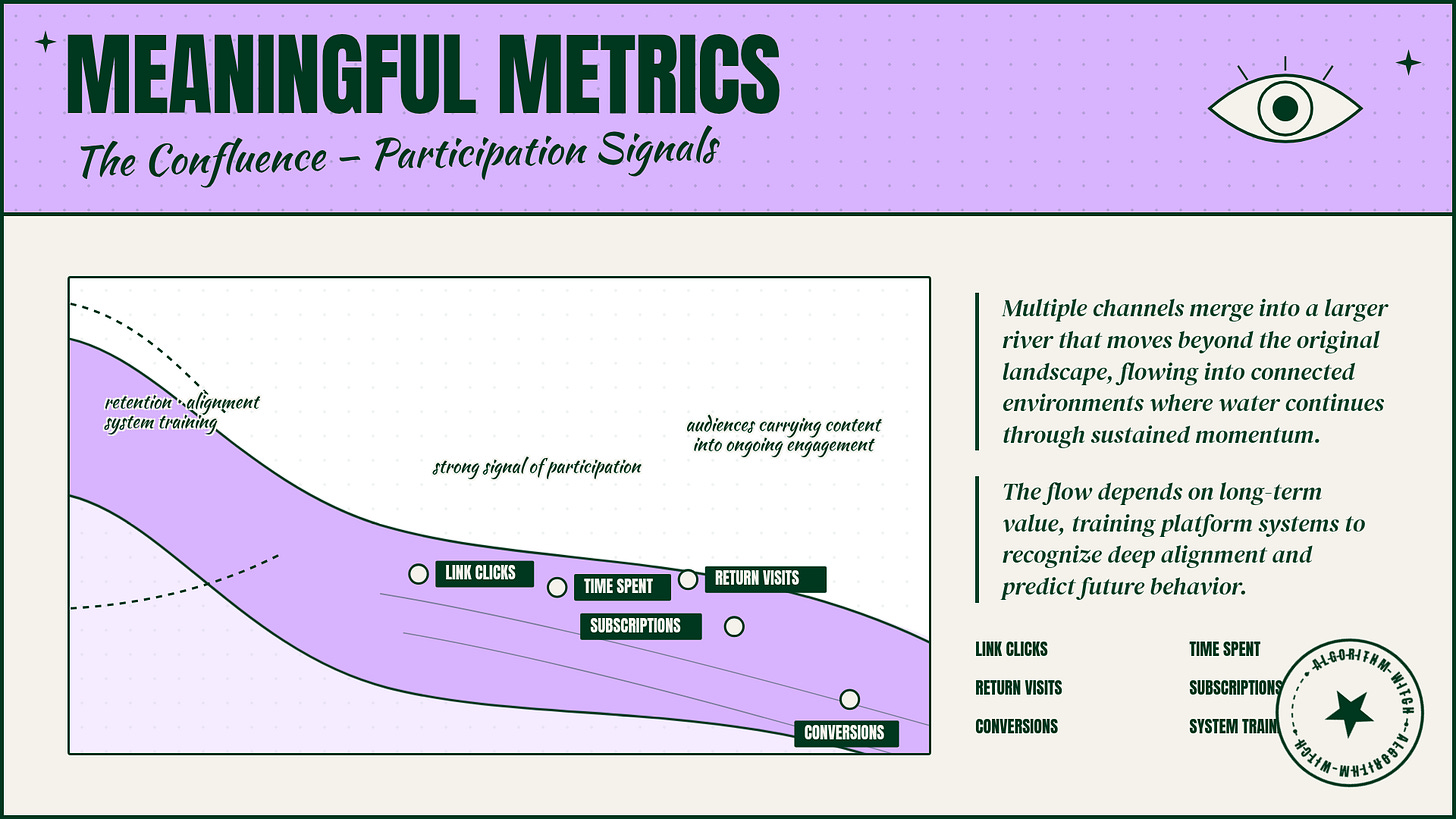
Meaningful metrics emerge at the level where content moves beyond interaction and into behavior. They capture signals that indicate participation, intent, and continued engagement across systems. These signals align with how platforms model long-term relevance and value.
Link clicks
Time spent
Return behavior
Subscriptions
Conversions
Link clicks extend behavior beyond the platform. They indicate that content prompted further action and that audiences are seeking additional information. This signals intent rather than interaction, showing that engagement has progressed into movement.
Time spent reflects sustained attention across environments. It indicates that audiences are not only engaging but investing time in understanding the content. Platforms use this to predict long-term value and reinforce classification.
Return behavior shows that audiences come back to engage again. This signals continued relevance and strengthens system learning, as repeated interaction indicates alignment with audience needs over time.
Subscriptions and conversions represent committed participation. They show that audiences choose to stay connected or take action based on the content. These signals move beyond engagement into sustained relationship and behavior.
For climate and clean energy social media managers, this appears when audiences click through to explore programs or policies, spend time understanding energy systems, return to guides on incentives, or subscribe to continue engaging with the work. These behaviors indicate that content is supporting participation rather than interaction alone. They show that information is being carried into decisions, behaviors, and ongoing engagement. Meaningful metrics indicate that content moved beyond the platform into sustained action and alignment.
03Conclusion
As these layers flow together, metrics form a stream of how content moves through the landscape, where vanity metrics surface visibility, depth metrics carry engagement through interaction, and meaningful metrics determine whether that flow continues into participation. This progression reflects how platforms operate, translating behavior into distribution decisions and shaping what continues to circulate based on patterns that persist across posts, formats, and audiences.
In climate, clean energy, and sustainability work, this progression resolves into a system of converging conditions: visibility introduces the issue, engagement sustains interaction, and participation determines whether that interaction carries forward into action. Accounts can grow during high-visibility moments without generating engagement. Engagement can form without extending into participation. Participation requires a pathway that connects attention to action.
Turning collective power online into collective action offline depends on whether these layers connect. Visibility must allow someone to encounter the issue. Engagement must create interaction that sustains attention. Participation must provide a path that extends beyond the platform. When these layers align, content moves beyond circulation and into decisions, behaviors, and coordinated action that exist outside the system that first distributed it.
If you’re feeling lost in a sea of content take a look at my services to help chart a course forward 🌊