The World Cup just ended, and every match made the same structure visible: a team enters the field with an identity already built long before kickoff, then adapts that identity to a specific opponent, moment, and goal. The formation may shift, the lineup may change, and the strategy may respond to what is happening on the field, while the principles guiding how the team plays remain recognizable across the tournament.
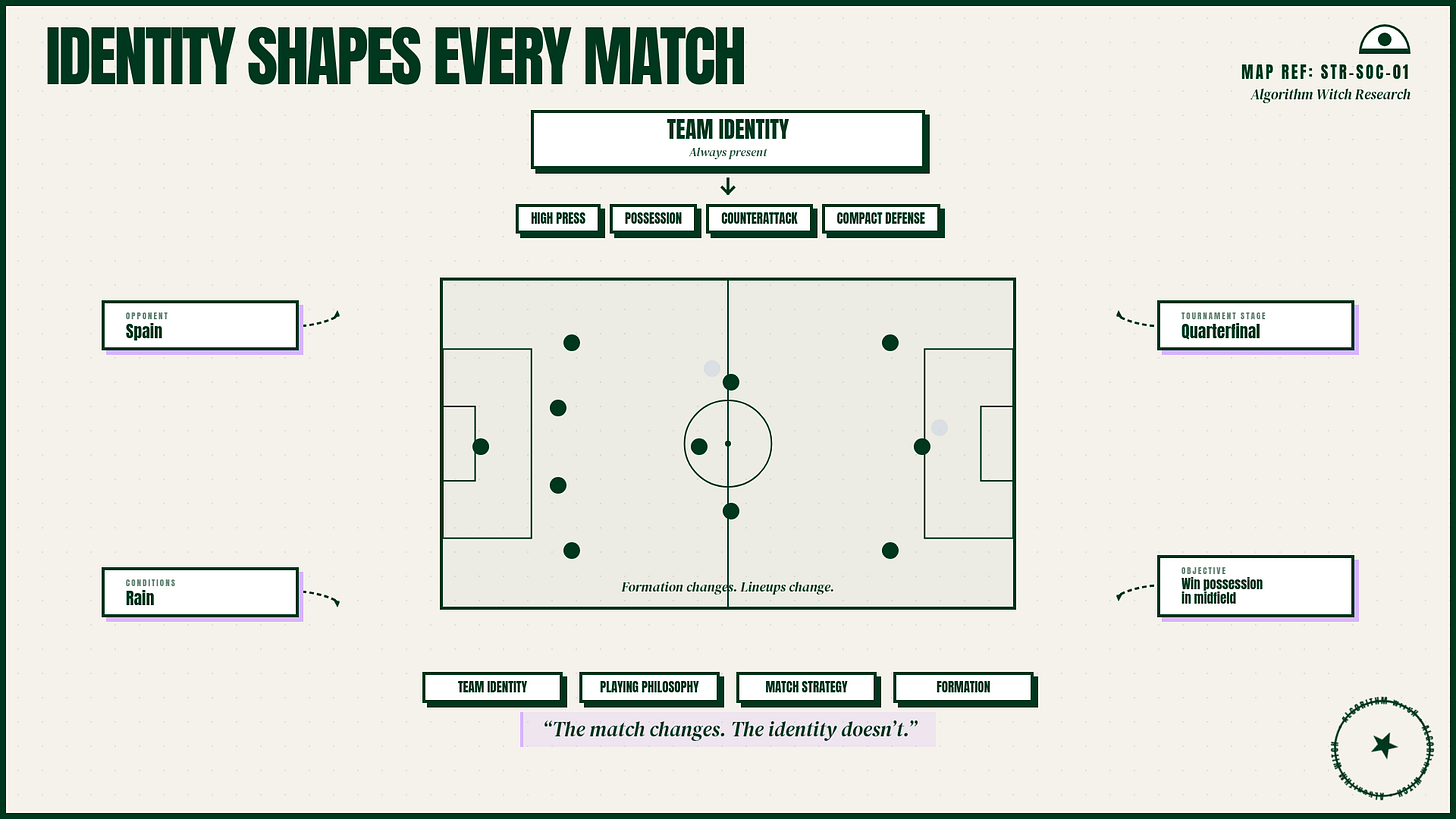
Content strategy works through a similar system. Your pillars are the principles shaping how your organization consistently communicates, while campaigns are the matches where those principles are applied toward a specific outcome. Education, leadership, advocacy, community, research, and empowerment can remain stable across years, while a fellowship launch, climate summit, fundraising drive, or policy campaign gives those ideas a defined audience, timeline, and pathway into participation.
Teams run into trouble when they treat every match like the beginning of a completely new sport. Communications teams experience the same breakdown when every month begins with an empty calendar and a brainstorming session disconnected from the work already underway. Pillars establish the organization’s style of play, campaigns create the conditions in which that style becomes visible, and the content calendar records how the strategy moves from preparation into participation.
Last week I wrote about why brands sound like white noise when every post arrives as an isolated update. The solution was building a communications system where pillars, campaigns, events, content, and performance data remain connected, allowing each campaign to strengthen the next. This week, I want to move one layer deeper and explain how pillars and campaigns perform different jobs inside that system, because the calendar becomes much easier to complete once each layer has a clear role.
01Pillars Define How Your Organization Plays
A pillar is a recurring idea that helps people understand what your organization consistently contributes. Education, leadership, advocacy, community, research, and empowerment function like the principles guiding a team’s style of play because they shape how the organization approaches every campaign, even as the audience, platform, and moment continue changing.
The strongest pillars sit close to the mission while remaining broad enough to support many forms of communication. Education can include explainers, webinars, guides, workshops, and resource libraries. Leadership can include staff expertise, fellowships, mentorship, and professional development. Community can include partnerships, local events, volunteers, participant experiences, and shared outcomes. Each pillar gives the organization another way to express its identity across the season.
Pillars become useful when they guide decisions. A coach can look at a lineup and see whether the team’s approach is balanced, and a communications team can look at a calendar and see whether the organization’s full identity is being represented. When one pillar dominates every campaign while another disappears for months, the calendar reveals where the public story has narrowed and where audiences are losing access to parts of the work.
02Campaigns Create the Match
A campaign is a defined period of coordinated communication organized around a goal. It might introduce a program, recruit applicants, promote an event, release research, mobilize supporters, raise money, or move an audience toward a specific action. Each campaign creates a field of play with its own audience, timeline, milestones, and desired outcome.
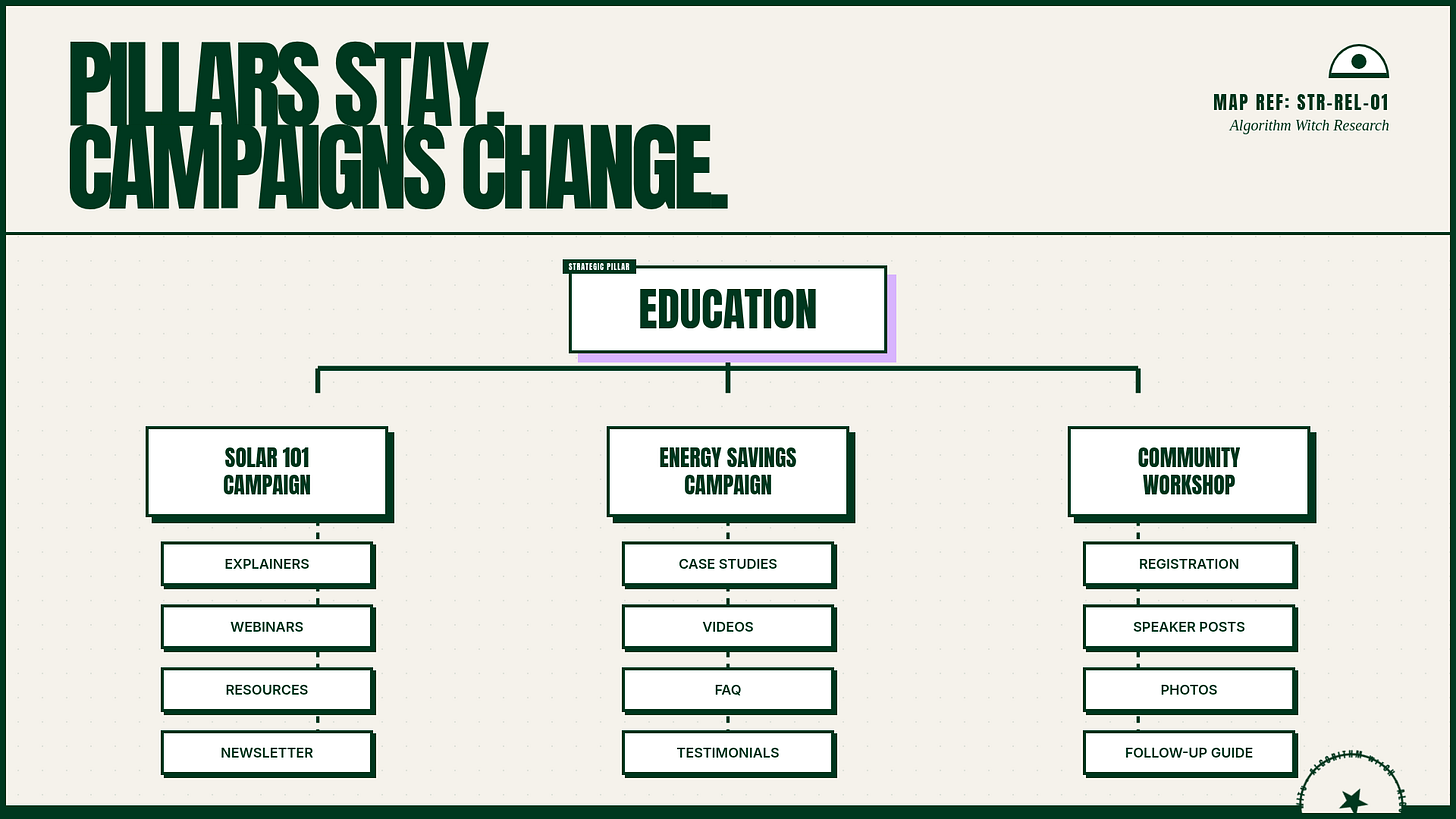
Education is a pillar, while a six-week Solar 101 series is a campaign. Leadership is a pillar, while fellowship recruitment is a campaign. Community is a pillar, while a volunteer month organized around local events is a campaign. The pillar shapes how the organization approaches the work, while the campaign determines what is happening now and how people can enter it.
This distinction matters because pillars alone provide direction without creating enough movement to fill the calendar. Campaigns create deadlines, stories, participants, turning points, and outcomes worth documenting, which means the content calendar begins to reflect the work already unfolding across the organization.
03Every Campaign Should Activate Multiple Pillars
A strong team rarely relies on one player to carry the entire match, and a strong campaign rarely depends on one pillar to carry the entire story. A climate summit can advance education through workshops, leadership through speaker profiles, community through attendee stories, research through new findings, advocacy through a call to action, and empowerment through practical resources participants can use afterward.
This approach expands the calendar without requiring more campaigns. One initiative can produce a speaker interview, an educational carousel, a participant story, a research summary, a registration reminder, a behind-the-scenes video, and a post-event resource guide because each pillar creates another position from which the campaign can be understood.
The campaign remains recognizable because every piece belongs to the same larger effort, while the different pillars give audiences multiple ways to enter. Some people will arrive through research, others through community, others through leadership, and the campaign becomes stronger as those entry points converge around the same goal.
04Build the Season Before You Build the Content Calendar
A team does not begin planning by staring at thirty empty squares on a calendar. It begins with the season: the matches, tournaments, training periods, travel, recovery, and moments where performance matters most. Communications planning becomes easier through the same sequence.
Start with the organizational calendar. Map report releases, application periods, webinars, legislative sessions, volunteer days, fellowships, conferences, office hours, fundraising drives, partner collaborations, and annual milestones. These moments create the season, while campaigns organize communication around them and pillars determine how each one will be expressed.
A webinar can begin weeks before the event through topic framing, speaker announcements, registration, partner promotion, and audience questions. It continues during the event through live participation, quotes, and community interaction, then extends afterward through recordings, summaries, resources, follow-up actions, and performance analysis. The event date becomes one moment inside a longer campaign rather than the entire communication opportunity.
05Turn the Campaign Into Calendar Coverage
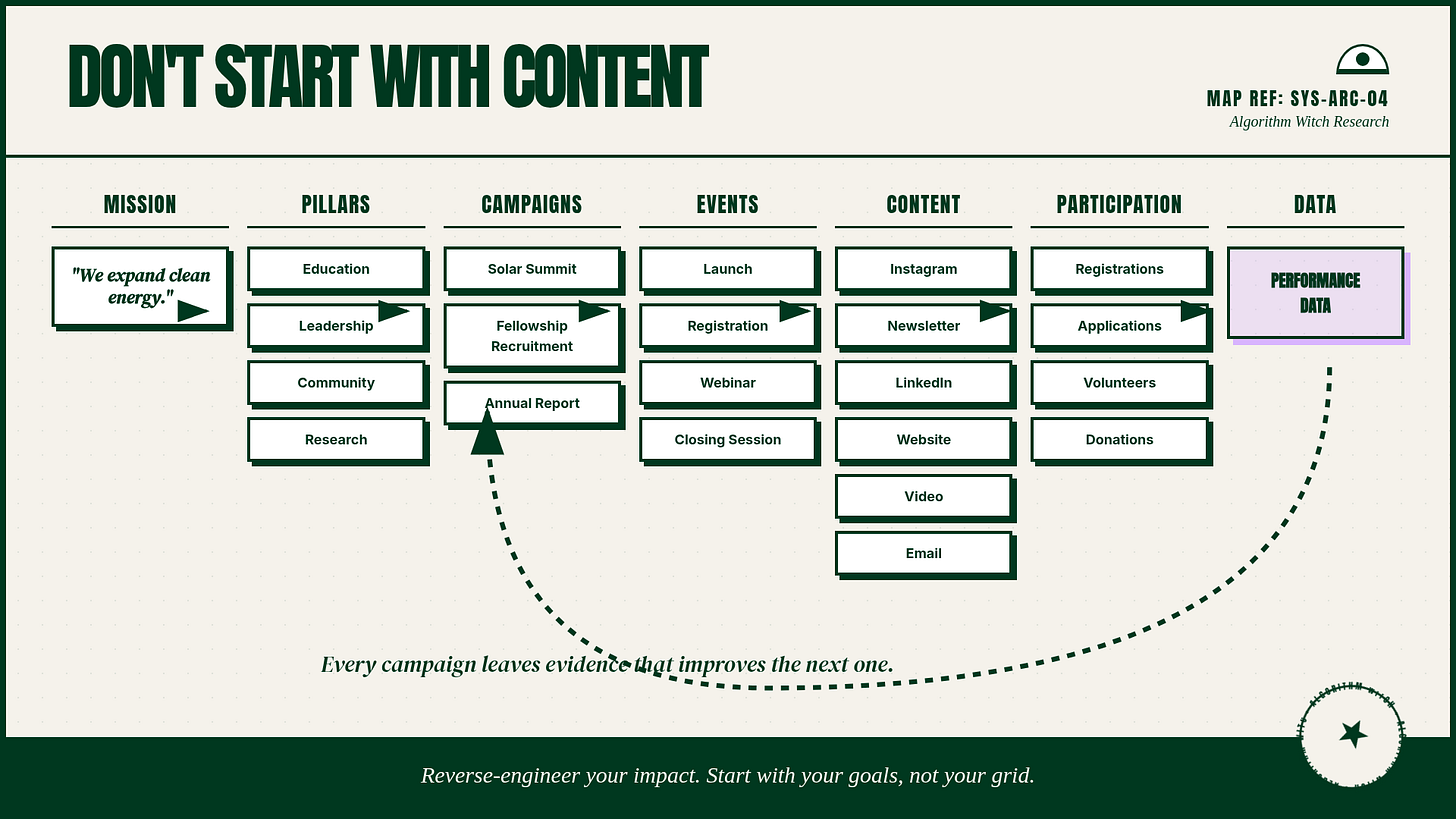
Once the season is visible, the content calendar can be filled by mapping every campaign across its timeline and identifying which pillars will appear within each phase. Early content can build context and recognition, middle content can recruit participation and deepen understanding, and later content can preserve the lessons, resources, and stories produced through the campaign.
The calendar becomes a record of movement across the campaign. It shows where audiences first encounter the issue, where they gain enough context to understand it, where they receive an opportunity to participate, and where the organization continues the relationship after the central event or deadline has passed.
This structure also reveals where the strategy is breaking. A campaign may contain extensive educational content while offering no clear action. Another may ask for participation before audiences have enough context to recognize the value of entering. A third may attract strong attendance while allowing the stories, lessons, and resources generated through the event to disappear afterward. Mapping the full campaign makes those gaps visible before they become missed opportunities.
06Performance Data Becomes the Film Review
After a match, teams study what happened because the next strategy depends on understanding where movement held and where it broke. Campaign data serves the same function.
Registration rates show which framing created enough relevance for someone to commit time. Clicks reveal where curiosity moved toward deeper information. Shares show where audiences found value worth distributing, while volunteer signups, donations, applications, and attendance reveal where communication translated into participation.
Those observations should shape the next campaign before new content is produced. A recurring webinar series can compare topics, speakers, registration language, reminder timing, attendance, and follow-up behavior across several cycles. A fellowship campaign can track which stories attract applicants, which platforms produce completed forms, and where prospective participants leave the process.
Pillars provide continuity across those experiments, campaigns create the conditions for testing them, and performance data reveals how the system behaved. The next campaign begins with evidence from the previous one, allowing the organization to refine its strategy instead of rebuilding it from the opening whistle.
07The Calendar Becomes a Communication System
A pillar defines how your organization consistently plays. A campaign creates the match, events concentrate attention inside it, content distributes the action across platforms, and performance data shows how audiences moved through the system.
Once those layers are connected, the calendar becomes easier to complete because the organization already has a season, a strategy, and work unfolding across time. Every post belongs to a campaign, every campaign expresses multiple pillars, and every campaign produces evidence that strengthens the next one.
That is the structure I am building into StellarSync. I wanted a place where pillars, campaigns, events, ideas, content, and performance data could remain connected instead of disappearing across spreadsheets, scattered notes, and disconnected planning documents. The goal is to help organizations build communication systems that reflect the full life of their work while becoming more effective every time the strategy returns to the field.
I’m currently opening limited free beta access. You can join the waitlist here: https://stellarsync.app/contact/