When I got laid off, I started posting on LinkedIn because I love what I do, missed my work, and suddenly had a very practical reason to become more visible. I focused on my personal brand with the same commitment I had my previous roles. Six months later, I had gained more than 3,000 followers, found consulting clients, launched a newsletter, and built relationships with people across my field who probably never would have encountered my work through a job application. LinkedIn became part of how I participated professionally, and that changed how I think about using the platform during a job search.
The digital strategist in me sees the platform data behind what happened and finds it easier to explain. LinkedIn’s recommendation system is built around interpreting what posts are about and connecting them to people’s evolving professional interests. Visibility on LinkedIn accumulates through participation in the feed, which means a job search on LinkedIn is the perfect vehicle for someone to encounter your work outside of the endless sea of applications. If I had to find a new job on LinkedIn, these are the first places I would start.
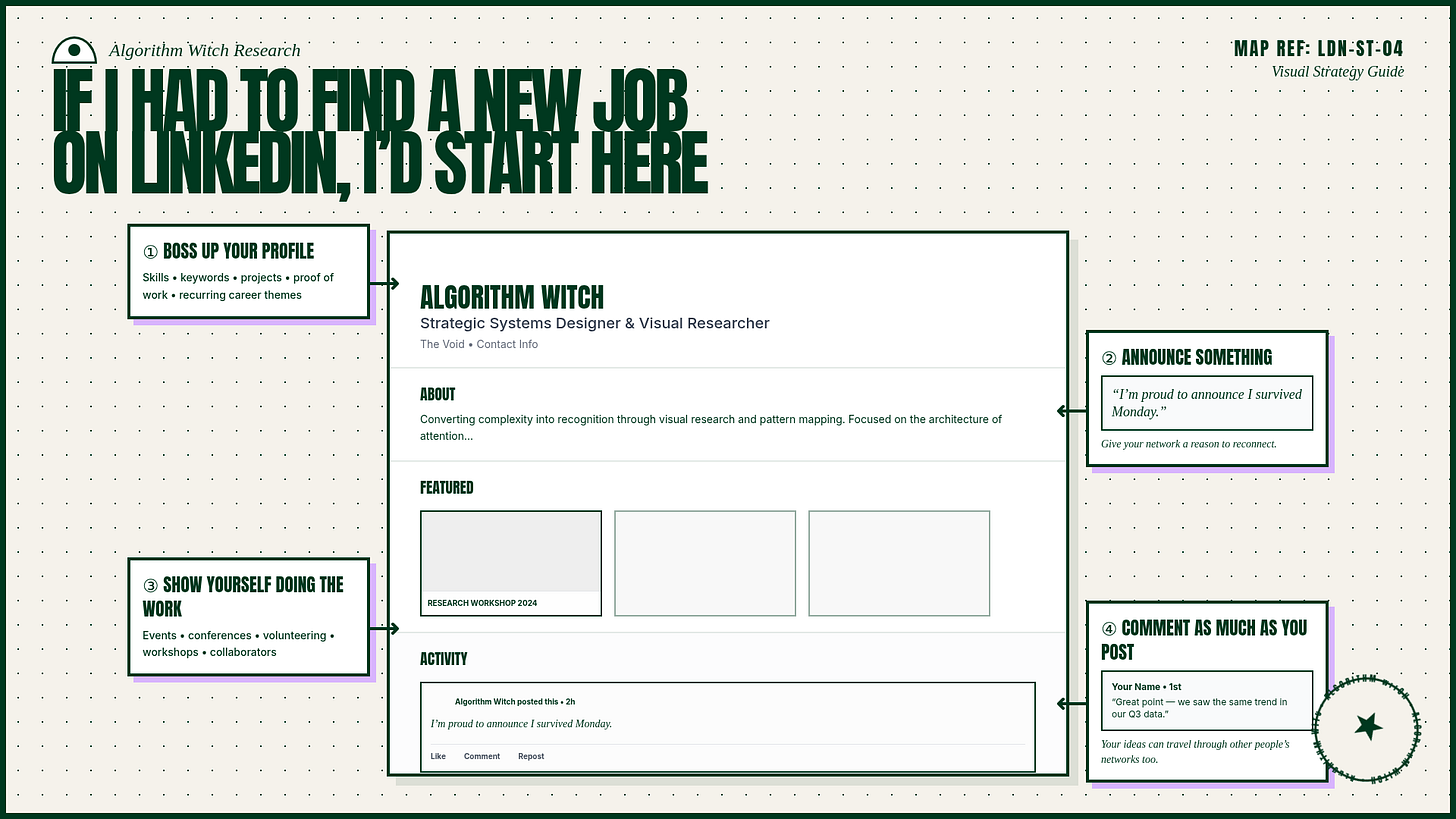
011. Boss up your profile
Before I posted anything, I would make my profile as complete as possible because every person who discovers me through a post, comment, search, introduction, or shared connection needs somewhere to go next. I would fill out my skills, rewrite old job descriptions using the language people in my field actually use, add projects, link to work I am proud of, update my featured section, and make sure my website or portfolio is easy to reach.
I would also look across my career for the themes connecting seemingly different jobs, because professional identity becomes easier to recognize when someone can understand how the pieces fit together. If community building appears across four roles, I would make it visible; if digital strategy connects work across several industries, I would name it consistently; if there are two or three subjects I want associated with my work, I would make sure someone encounters them throughout the profile. LinkedIn’s feed increasingly interprets content semantically and matches it with patterns in people’s professional interests, while repeated signals help recommendation systems understand what an account represents and which audiences may find it relevant. Your profile extends that recognition for the humans who arrive there, turning discovery into a clearer understanding of what you actually do.
022. Announce something
LinkedIn gives professional milestones a native language, which makes announcements one of the easiest formats for someone rebuilding their presence to enter. Aside from a new job, a hobby, certification, or personal project all give your existing network a recognizable reason to interact with you again.
And yes, you can stretch the definition of announcement here. I am proud to announce I survived Monday.
The useful part is the participation surrounding the milestone. An announcement creates an opening for former coworkers, collaborators, friends, and people working adjacent to you to re-enter your professional network, while their responses create additional conversation around your work. You are giving people a reason to recognize where you are now, which gives them more information for understanding where you might fit next.
033. Go somewhere and post the pictures
If I were job searching, I would actively look for conferences, panels, volunteer opportunities, workshops, meetups, professional events, and community spaces connected to the work I wanted to do, then I would document my participation when I was there. Event posts carry a lot of professional information very efficiently because a photo can establish who you are around, what spaces you participate in, which subjects hold your attention, and what your work looks like outside the description on your résumé.
Yes, your face should probably be in some of the pictures. People build familiarity through people, and professional visibility becomes more useful when someone can connect the ideas they have seen from you with an actual person participating in the field. Events also expand the number of people connected to a single post because organizers, speakers, coworkers, partner organizations, and people you met can become part of the conversation, allowing one experience to travel through several overlapping professional networks.
That network effect is especially useful during a job search because finding work depends partly on who can recognize where you fit. Posting from the places where your field already gathers makes your participation visible, while tagging the people and organizations genuinely involved creates pathways for people outside your immediate network to encounter you through shared professional context.
04Bonus: Comment as much as you post
If I planned to post three times a week, I would also set aside time to meaningfully participate in other people’s conversations at least three times a week, especially with people whose careers I admire, people doing work adjacent to mine, coworkers and former coworkers, organizations I care about, and people whose perspective expands how I understand my own field.
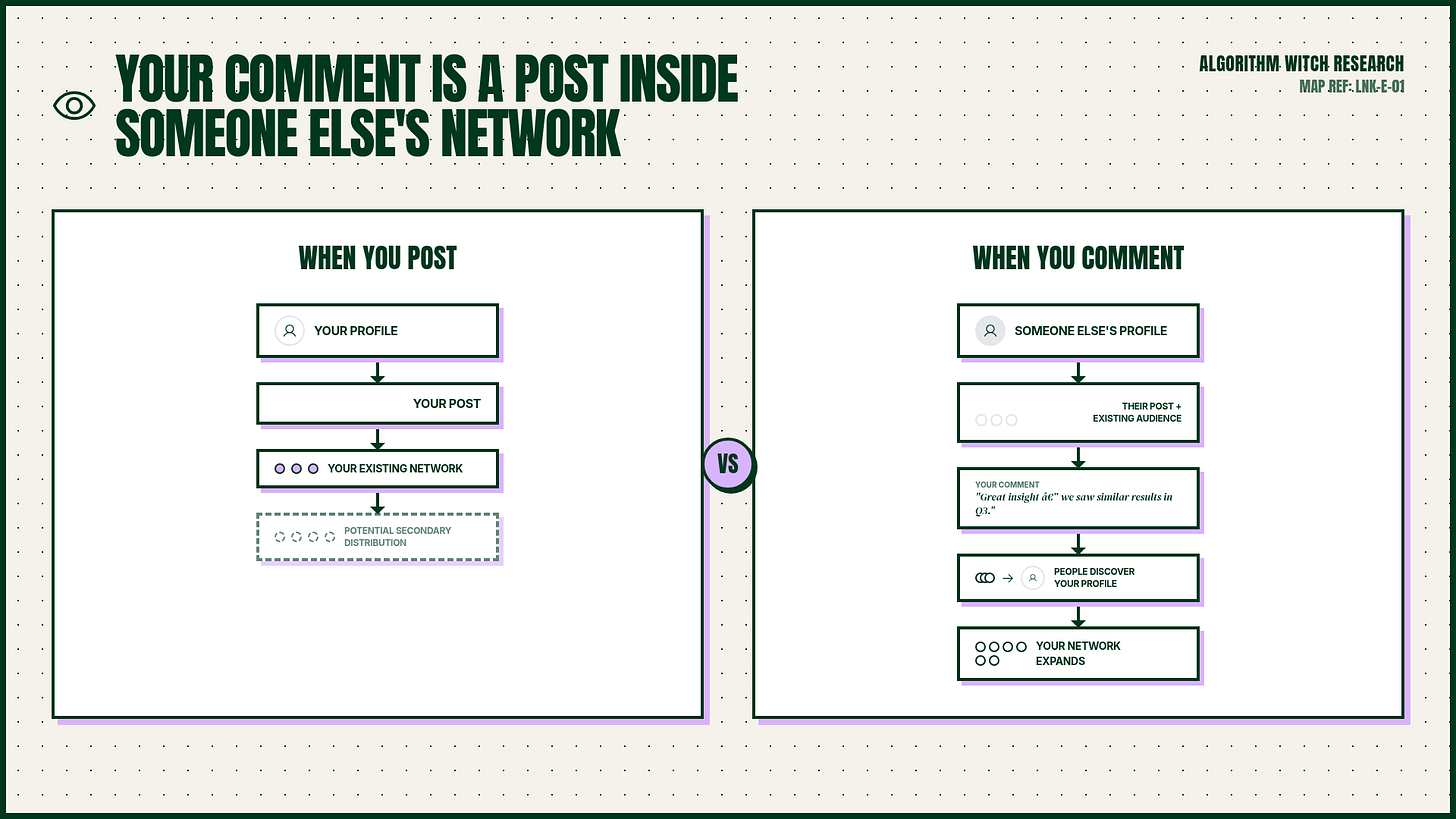
Some of my highest impression counts on LinkedIn have actually come from comments, which makes sense when you think about where a comment sits. A post begins with your network and can expand outward; a comment places your perspective inside a conversation where another network is already paying attention. Every useful comment gives someone another pathway into your profile, while repeated participation creates more context around the subjects, people, and professional communities you consistently engage with.
The platform data supports the larger behavior. Across six platforms, Buffer found posts with replies consistently outperformed posts without them, with some of the largest lifts appearing on LinkedIn and Threads, while LinkedIn’s ranking system increasingly combines interaction signals with semantic understanding of professional interests. Conversation gives the system information, and it gives people something more valuable: a way to encounter how you think before they ever need something from you.
05Build enough signals to be found
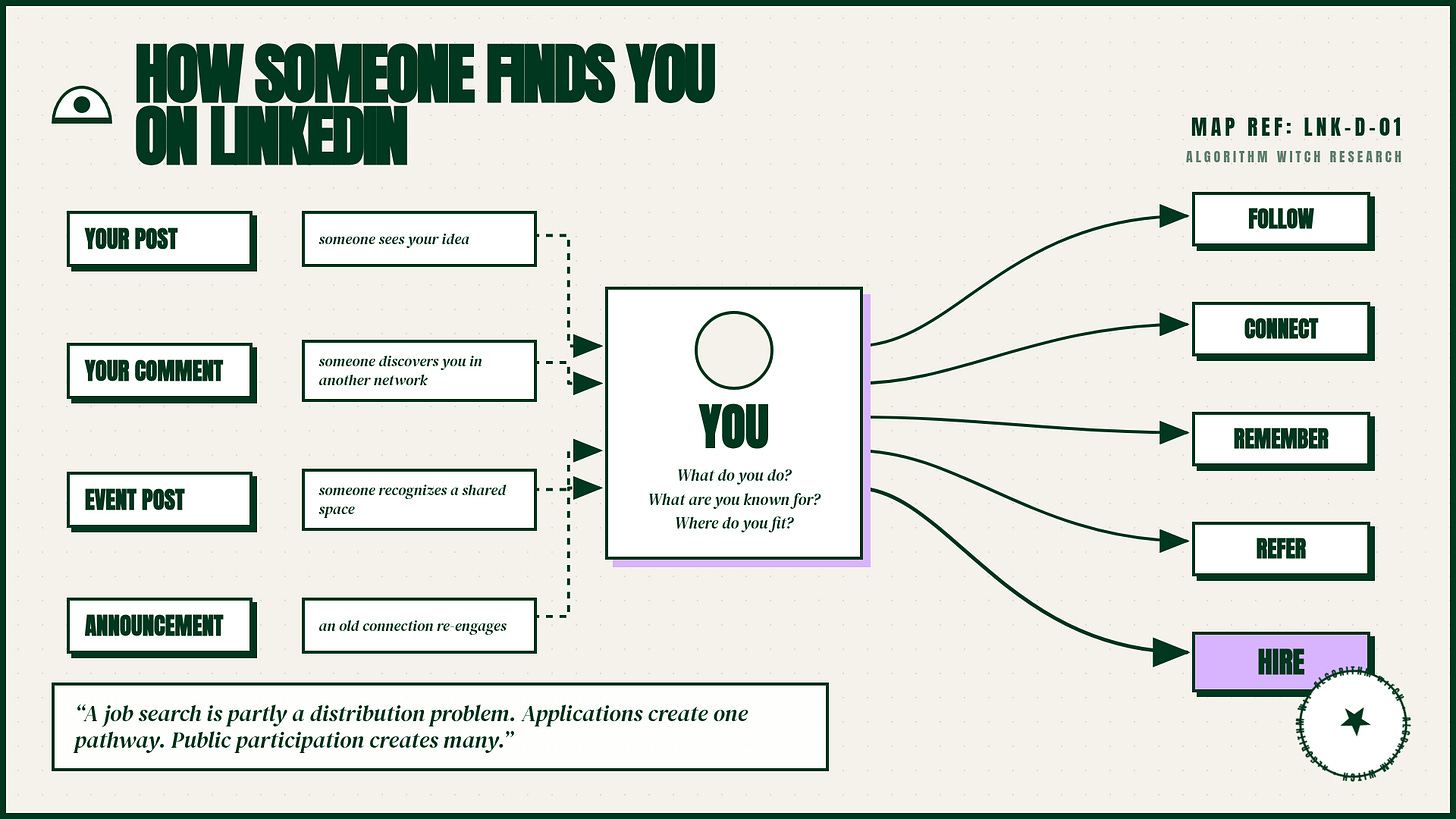
If I needed a new job tomorrow, I would use LinkedIn to make my professional participation easier to see. I would make my profile explain the work clearly, give my existing network reasons to reconnect with me, document myself participating in the field I wanted to work in, and enter conversations happening beyond my immediate network.
That approach also changes what follower growth means. Buffer found posting more can increase aggregate audience growth even when average reach per individual post declines, which means the value of participation accumulates across the system rather than depending on every post performing exceptionally well. I gained more than 3,000 followers in six months after getting laid off, and those followers became one visible outcome of a much larger change: more people knew what I did, more people encountered my work, and more pathways existed for someone to connect me with an opportunity.
A job search forces you to make space for yourself. LinkedIn gives you a public environment where you can keep supplying the context they need to make that connection.