There was a time when being online meant building a place. You changed the background, picked the song, reordered the page, embedded the widget, learned enough HTML to make your profile feel like yours, and treated the internet like a room you could decorate. Tumblr themes became part of your identity. Blogs had personalities. Websites looked different because people wanted them to. The internet felt like a family home. Customization gave people a way to shape the environment around their identity. Participation felt tangible before platforms became a race to minimalism and infinite scroll. Back then, being online felt different.
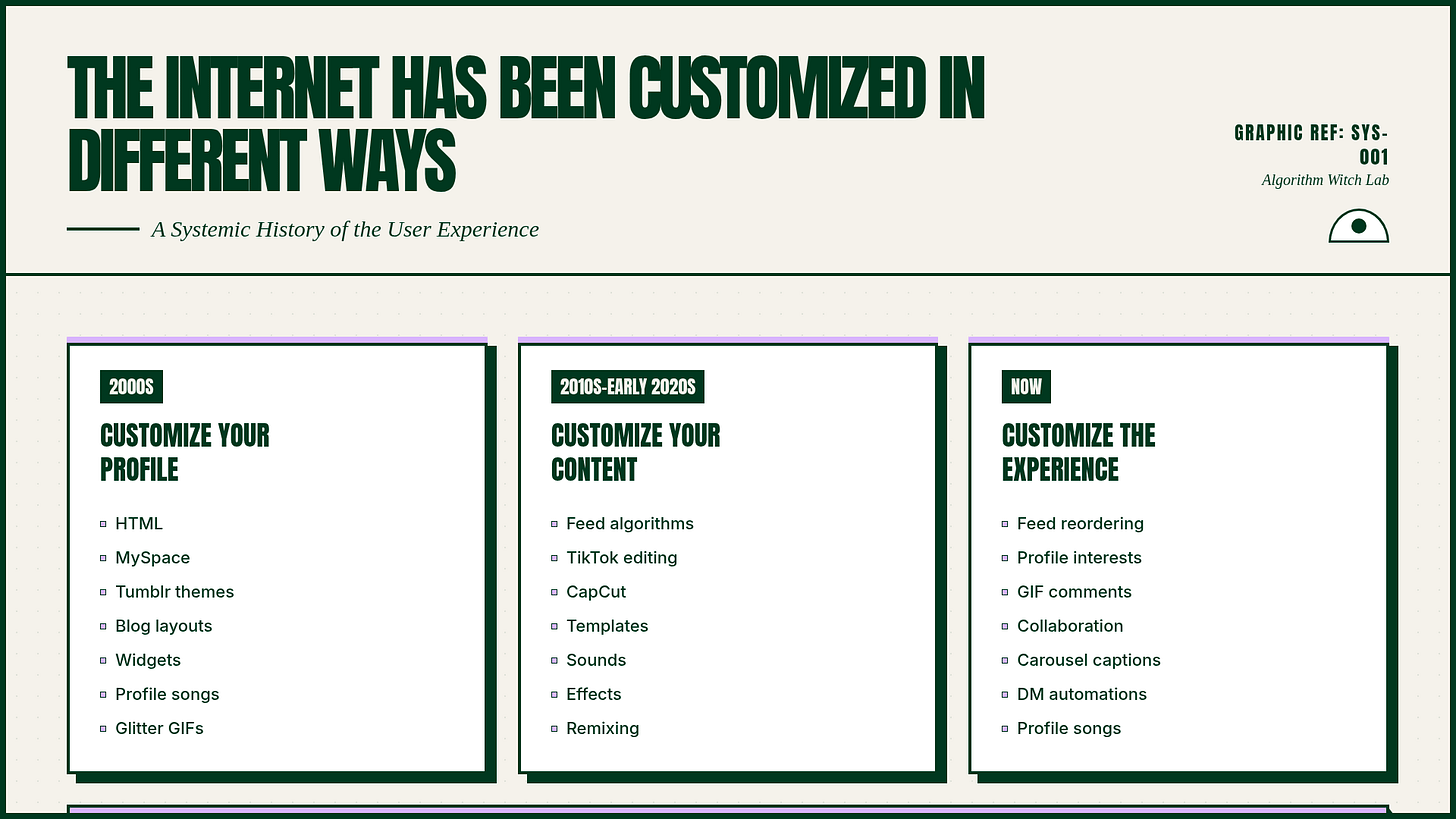
That feeling never fully disappeared, but it was buried under platform standardization. The 2010s trained users to publish into systems they could barely shape. TikTok’s global app arrived in 2018 after merging with Musical.ly, and its creative infrastructure helped define the next era of online participation by making editing, remixing, sound, captions, effects, and rapid video production feel native to the feed. CapCut extended that logic after launching globally in 2020, giving everyday users a mobile editing layer that turned video customization into a mass behavior. The feed became less personally customizable at the profile level, while the content itself became more editable, remixable, and template-driven. TikTok brought customization back by making video editing accessible to all. Anyone could create something that looked professional without learning Premiere.
Now the customization layer is moving back into the platforms themselves. Over the past month alone, Instagram has rolled out feed reordering, profile interests, individual captions for carousel slides, and continued expanding creative tools like Edits, while LinkedIn has doubled down on creators with the return of its vertical video feed, GIF comments, and new collaboration features. Taken together, these updates point toward platforms are becoming more responsive to the people using them.
Platforms are giving creators more ways to shape first impressions, conversations, profiles, and audience experiences at the same time AI is making the feed more crowded than ever. Small customization features give people a greater sense of ownership over the spaces they’re building, while giving platforms more opportunities to encourage participation.
Let’s look at how Instagram and LinkedIn are quietly bringing customization back to the internet.
01LinkedIn
LinkedIn has spent the past month making the platform feel a little less corporate and a little more human.
The return of the vertical video feed, first launched in 2024, gives creators another dedicated space for discovery. Vertical video already dominates nearly every major platform, but LinkedIn is adapting it to expertise rather than entertainment. Professionals are increasingly explaining ideas, documenting projects, and sharing knowledge in video because it creates another pathway into their work.
GIFs in comments make conversations more interactive and fun. The comments are one of the most interesting changes. LinkedIn visibility is tied to conversation depth. A post keeps moving through replies, second-degree interactions, follow-up comments, profile visits, and network signals. GIFs give people another entry point into that loop, which means creators and organizations should start treating comments as part of the content environment rather than a reaction layer underneath it.
Collaboration features continue expanding, making it easier for creators and organizations to publish together and share audiences rather than treating every post as an individual effort. Collaboration features point toward another form of customization.
For advocacy, climate, nonprofit, and expert-led organizations, these updates create more ways to design participation across the platform. Vertical video gives subject matter experts another pathway into discovery. Collaboration features make it easier to bring researchers, organizers, founders, communications teams, and community partners into the work instead of keeping the brand separate from the people behind it. Comments become places where audiences respond emotionally, ask questions, share experiences, and continue the conversation long after the original post is published.
Organizations should think about all three before they hit publish. Decide who should appear on camera, who should collaborate on the post, and what conversation you want to happen in the comments. Ask questions people can answer from experience, respond early, and invite collaborators and subject matter experts into the discussion. The strongest LinkedIn strategies will increasingly function like communities of expertise, where video drives discovery, collaborations expand reach, and conversations become part of the content itself.
02Instagram
Your profile is where conversion happens. Someone discovers a Reel, taps through, scans the grid, reads the bio, notices shared interests, and decides within a few seconds whether to follow, subscribe, donate, register, or keep exploring. Instagram is steadily giving creators more control over that decision.
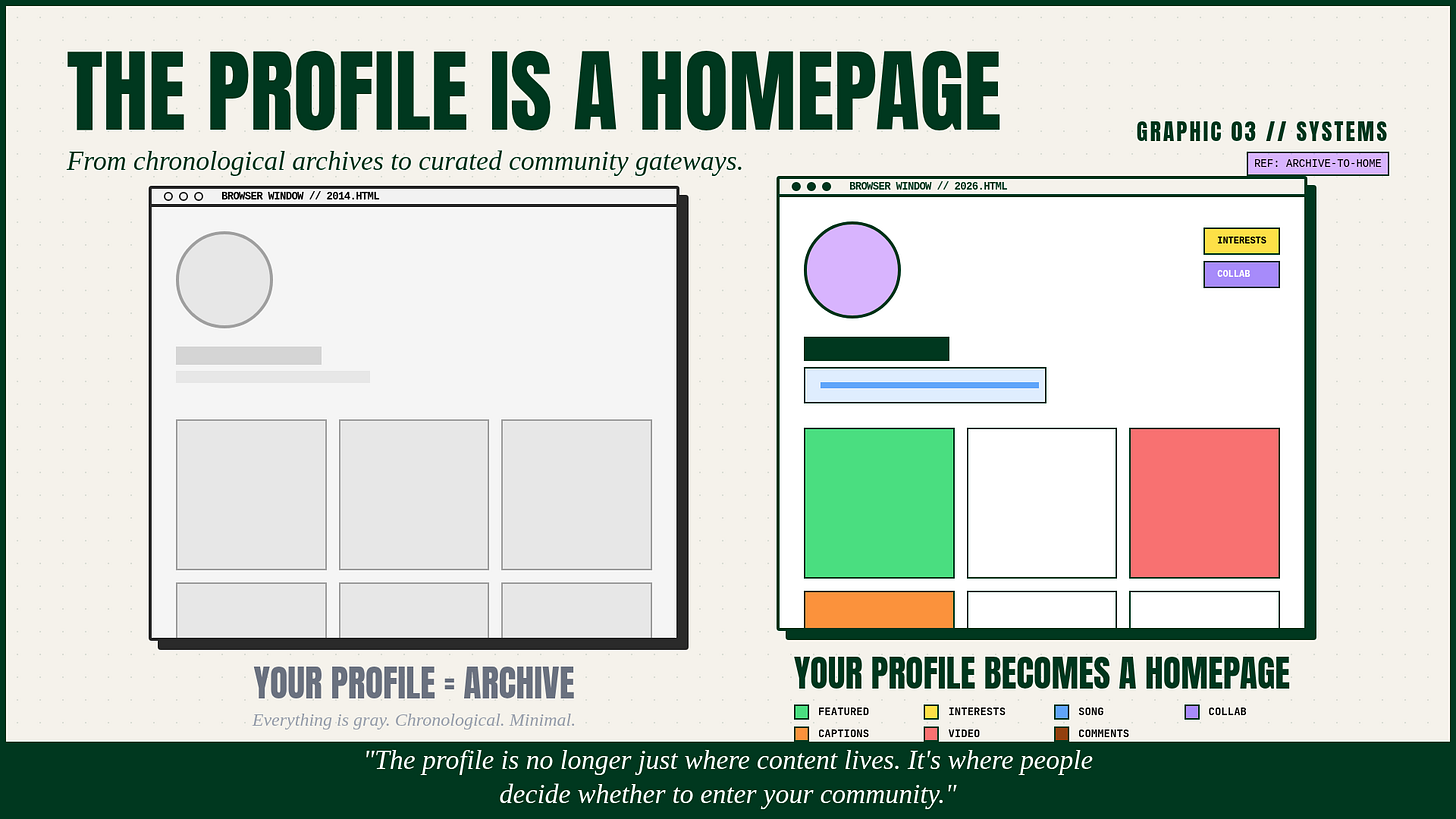
Instagram finally allowing users to reorder their profile grid is one of the clearest signs that profile-level customization is returning. For years, Instagram trained people to think chronologically. You published a post, it entered the grid, and your profile became an archive shaped by time. Feed reordering changes that. The profile can become a landing page again.
This extends well beyond the grid. Instagram is testing allowing creators to add interests to their profile, making it easier for people to understand what an account is about before following. Carousel posts can include individual captions on each slide, allowing creators to layer context throughout a story rather than relying on a single caption at the end. Last year, Instagram also launched Edits, bringing more of the creative process directly into the platform, and now we see more Instagram x Creator collaborations promoting the tool than ever. On top of all of this, profile songs have returned, giving creators another way to express personality before someone even views a post. Instagram is also expanding how creators communicate with their audiences. Meta introduced its own free alternative to ManyChat through Meta Business Suite, making automated direct messages, comment-to-DM flows, FAQs, welcome messages, and lead generation available natively inside the platform. Features that once required third-party tools are increasingly becoming part of Instagram itself. Every feature gives creators another opportunity to shape how someone encounters their work.
And now that you’re up to date on Instagram, keep an eye out for more platform updates from Meta! This is a trend that doesn’t seem to be slowing down. Back in Fall 2025, threads recently introduced ghost posts, allowing content to disappear after twenty-four hours. Together, Instagram and Threads are giving creators greater control over both how their work is presented and how long it remains part of their public identity.
For organizations, this creates an opportunity to ttreat your profile like a homepage rather than an archive. Arrange the grid around your strongest work. Use profile interests to communicate your expertise. Think of carousel captions as a way to guide readers through an idea slide by slide instead of leaving all of the context until the end. Every element of the profile now contributes to how someone enters the work.
03A More Craftable Internet
The platforms are becoming more responsive because creators want more control over how people experience their work. At the same time AI is making the feed more crowded than ever, customization gives people a greater sense of ownership over the spaces they’re building while giving platforms more opportunities to encourage participation.
I don’t think this is just another product cycle. I think we’re watching platforms respond to a growing nostalgia for a more craftable internet. People want places that feel like their own again. Every new feature gives creators another way to shape first impressions, conversations, storytelling, discovery, and community.
The internet is becoming customizable again. The tools look different than they did twenty years ago, but the feeling is starting to come back.